Author Archives: Hans Schiefelbein

About Hans Schiefelbein

In pursuit of a healthy and disciplined lifestyle. My goal is to help people attain and sustain their health.

Can’t Blame Mother Nature This Year

How cliche to talk about weather, right? But I hear so often how winter is so tough for working out – it can be a legitimate deal-breaker for even the toughest workout warriors. Well that sure hasn’t been a good excuse this year, right! We’ve had the most mild winter in as long as I can remember So has it still been an excuse for you?

No shirt, no shoes, no PROBLEM!

Working out outside is 100% more advantageous than that indoor treadmill or elliptical workout so many of us default to. I know I come down kind of hard on this one, but the reality is people who workout outdoors have better adherence to their workouts and I would argue have better results at the same time. Now don’t take this too far – I’d rather you workout at the gym than not at all. But what I’m saying is that if you’re willing to go outside and battle the elements, I would argue that you’re determination is where it needs to be.

In reality excuses do legitimately come up. If it’s not the weather, it’s family obligations. Or grad school – I know the feeling on that one. Or even work seasons have demands that make workouts tougher to make happen. But this year we can’t blame the weather, it’s just been too nice. An essential component to successful pursuit of healthy behaviors is identifying the obstacles that trip us up, set us back, even knock us down. Remember, it’s not how many times you fall down, it’s how many times you get back up.

Get up, get out, get going.


P.S.  I checked the weather for next week: 65+

So start today and this weekend and you’ll absolutely love next week!


The Grad School Project – Psychological Effects of Exercise (weeks 1 and 2)

The first two weeks of the spring semester have started really well.  This group of courses is going to challenge me to freshen up on my stats.  My three courses include:

  • Kines 700: PA psychology
  • Kines 791: PA Epidemiology
  • Kiness 699: Independent study in pediatric fitness

The following is my reflection on Kines 700 from the first two weeks.

Exercise adherence is a very difficult issue.  Education isn’t working.  We know that 50% will quit exercise within 6 month, and another 50% of what’s left will quit by 9 months.  By one year, everyone is done!  We’re applying behavioral change theories in an attempt to be more successful at getting people to make healthier choices and be more physically active.  One interesting area of development is the use of technology, with all the apps and being plugged in.  The digital advances are particularly interesting to me – make it easy (and fun?) for people; also include social networks because it’s been shown that the social component is essential – does that include social networks?  “Be more active, watch less TV” isn’t working.  We need to look at it differently.

Regarding exercise and mental health, we talked about the iceberg profile – athletes show exactly opposite signs of mental health as the inactive population.  And exercise has been shown to be as effective as antidepressants, sometimes even exceeding their effectiveness.  How do we get this implemented in our society?  What is the dose-response necessary?  Lastly, there has been no follow-up for studies on children.  The childhood obesity pandemic is completely unacceptable.  We have seen short-term affects in children when the increase their physical activity; how do we follow-up and change their lifestyles?

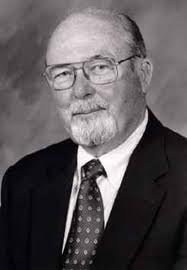
Dr. Mogan visited us the second week and told stories from his career.  He is considered the father of Exercise Psychology!  It really was an honor to have him with us.  His experiences range from working with the U.S. Olympic Committee to working in State mental health hospitals.  He has a particular interest in hypnosis, which was surprising to me but difficult to refute some of the results, and thus possibilities.

Dr. William Morgan

One interesting bit of research that Dr. Morgan presented was the idea of association vs. dissociation.  The conversation here is with elite marathon runners: do they associate and think about the pain of their body as they are competing, or do the dissociate and think about other distractions and not their pain.  Elite runners associate with their pain and their body, while sub-elite runners dissociated.

The most interesting topics Dr. Morgan discussed was his concept called Factor P.  Presented at ACSM in 2006, he suggested that we need to think of exercise and physical activity differently.  We need to think of working with Factor P, namely purpose.  Commuting to work, taking the dog for a walk, being involved in exercise groups.  These are example where there is a higher purpose than to just lose weight or firm up.  I have had this view for years, suggesting to all of my clients that they need to sign up for a run to add context and meaning to their workouts.  I’ve said that working out for the sake of working out simply does not work for 95% of the population – it certainly doesn’t for me, and I’m becoming an expert in the field.  As he says, running on a treadmill to nowhere is probably not a good idea.  Dr. Morgan has had a profound influence on my training principles for years; he was an instructor in PE 100 back in my undergraduate days.  The concept of Factor P was easily the biggest take-away from our lecture Tuesday afternoon.

Back to the Basics: Back on the horse, be the horse

Are you in a routine?  Has your routine dropped off with the cold weather?  Are you planning ahead for a summer of activity?  No matter where you’re at in your fitness cycle or season, it’s always important to stop and reevaluate what you’re doing and why.  In this post, I want to give you permission to change things up a little.


One important outcome of being a physically fit person is the ability to do a variety of physical tasks.  Say your son wants you to build a snow fort, so you need to shovel pile after pile of heavy snow.  Say your wife wants to pack up some clothes, and the only storage is the top shelve (she has six huge boxes to lift!).  Say your daughter wants to play “cowgirl”… and you’re the horse… for 45 minutes.  Can you do it?

No matter where you’re at in your fitness routine, take a week and strip down the workout.  20 minutes of cardio, and countdowns from 12.

  • Your cardio workouts are only 20 minutes, so you can push this a little if you have some aerobic base built up.  If you’ve been away from the road, get back to a nice easy 20 minute run.  But switch it up, add some challenge.
  • Countdowns are push-ups and sit-ups, starting at 12 each working down to 11 each, 10 each… all the way to one push-up and one sit-up.

There’s nothing too challenging about this change of pace.  But it brings us back to why we do what we do.  We want to be able to do the basics – run and lift our own body weight effectively.  This is a good practice that prepares us for the activities of daily life.

Would doing this workout for a week represent a level of competency in the area of physical fitness?  What exercises would you add to change things up and get back to the basics? 

Workflow

If you’re like me, there are so many tasks that demand our attention.  As I get deeper into the business world and try to manage family, work, hobbies, and recreational activities I find it so easy to get overwhelmed.  A couple years ago I stumbled upon David Allen’s project called Getting Things Done, often abreviated GTD.  What a concept!  Get things done.  It doesn’t get much simpler than that.  Yet it’s extremely relevant because life is really about what you produce.  You can think, dream, plan all you want – believe me, I have!  But at the end of the day it’s ultimately about what you have done, what you have created.

As I wrote about last week, I am really against New Year’s Resolutions.  I see too many people pursue drastic lifestyle changes from fitness to nutrition to reading to you name it.  And it’s just not an effective way to facilitate changes.  At the same time, the new year is naturally a great time to reflect on the previous year and plan out some goals and changes for the next year.  This is a good thing, a natural thing, and I would argue one that successful people have mastered.

Do you have a concrete workflow?

Today I want to challenge you with this: do you have a workflow?  Do you have a set of routines, a list of tasks, or some plan that you follow on a fairly regular basis?  I guess I’ll let some people off the hook right now.  If you can get up, go to work, be less than inspired, come home and make some dinner after watching a few shows only to return to the tv after dinner, then this post isn’t for you.  But if you’re someone who wants to start a business on the side, start a non-profit organization, volunteer somewhere, serve at church, write a book, or change the world, then let’s keep this going.  That was a little rant, but let’s be clear: you were created to create.  I give you ultimate freedom to decide the scope of that creativity, but contribute something to this society – we need you.

So for me, I wear a lot of hats.  Here’s a quick overview of the projects on my plate:

  • I am developing this blog which will eventually lead to a small business
  • I have a rough (very rough) outline for a book which is very related to the business
  • I’m pursuing a masters degree in leadership and management (not really) from all the books and blogs I read
  • I’m pursing an actual masters degree in Kinesiology from UW
  • I tweet daily as I go through #EatThisBook
  • I’m collecting recipes for another book, a fun recipe e-book to come out this summer
  • Oh, and I have a family!

I do not (do. not.) say this as a form of bragging.  If anything it would be easy to argue that I’m spreading myself out too thin.  But this is my reality, and this is my attempt at being transparent (it worked).  Here’s my point: none of this gets done if I do not have an excellent workflow to manage these projects.  And in another attempt at transparency, I’ll admit that I currently do not have that workflow developed.  But I’m getting there.  Here’s the kicker: I know from experience that things will contantly demand my time, and I will be a slave to the fun and interesting things on Twitter, blogs and Facebook if I am not careful.  Instead I need to have a workflow that ensures I get done the work that’s most important.  Sometimes that changes per day, even per week.  But it should intuitively make sense that without a solid structure for the day, without a process and protocol for managing inputs that happen over our 18 waking hours of the day we cannot expect to be as productive as we should.

So I don’t have the answers, for you at least.  I have a great start for myself.  But I want to challenge you to reflect on your daily workflow and determine if some changes (yes, slight changes) could make your day more productive.


Three Words for 2012

Ever since 2009 I have been doing a different version of New Year’s Resolutions.  I got the idea from Chris Brogan.  Essentially the idea is to take your goals and attitudes for the year and narrow them down to 3 words.  The mission is to have most of what you do on a daily basis fall under one of the three words. Brogan takes his three words and breaks them down into more specific areas adding layers and layers of detail.  He keeps this private, and I too reserve details for myself (although this year I added some context but also added a teaser).  These three words give you a good idea of where I’m focusing my energy and workflow in 2012.


Linebacker

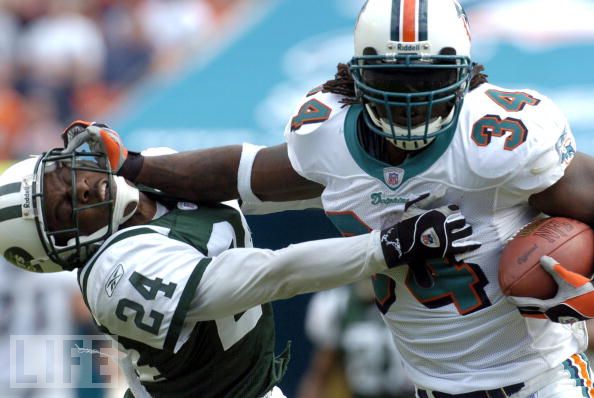
When I was thinking about my first thoughts of what I need to work on for the next year it was this: I need to take things to the next level.  I feel like I’m good in a lot of areas.  I’m well rounded in news, technology, productivity, athletics, training, etc.  Even grad school (which I started this year) started well.  I am happy with my work and I’m happy with my grades.  But as I reflect on my areas of expertise, I know that I need to challenge myself to get to the next level.  I’m a football guy.  So when I thought about myself I realized the word linebacker made sense on a couple levels.  First, a running back gets the ball and the offensive line does the work to open a hole.  For the running back to be successful, he only needs to make the right decision and then get through the hole.  This has been my life thus far – I’ve been gifted in certain areas, meaning some of the (preliminary) work has been done for me; you could say I was gifted.  I’ve made my reads, I’ve gone through the holes, I’ve been successful by many standards.  But there’s more to be had.  The next season of my life will require me to win at the next level – the linebackers.
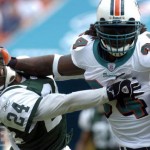
Who do you think wins this battle?

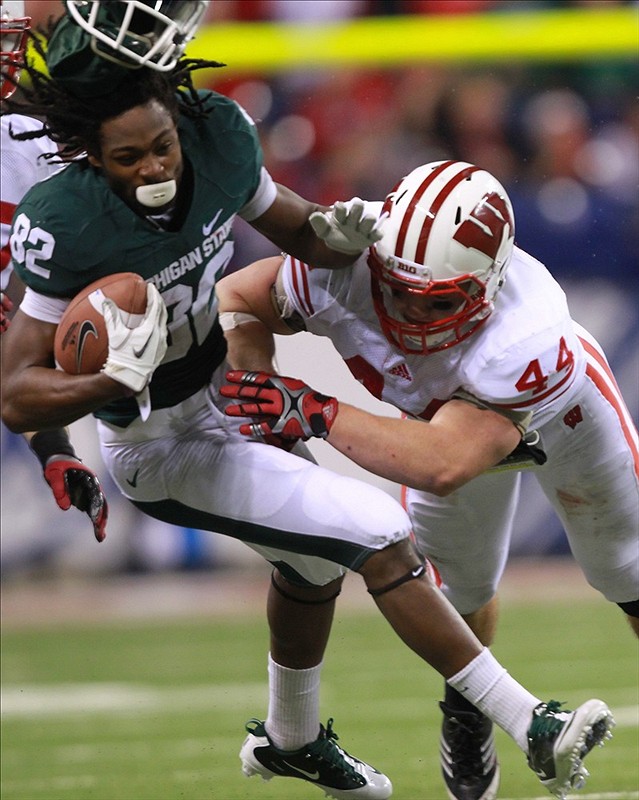
You see when a running back gets the next level, to the linebackers, he wins when he makes a move.  Which brings me to the second point: I need to be more intentional and aggressive, I need to make more decisions in order to be successful.  At this level, it becomes a one-on-one game: running back vs. linebacker.  Let me give you some examples.  Sometimes a running back is running “downhill” with a load of steam and he can run over the linebacker.  Other times he can juke him with a fake, changing directions.  Other times he can outrun the linebacker and elude him at the last moment with a stiff-arm.  None of these are where I find myself.  This season I’ll be using a spin move.  The running back is all but fully engaged with the defender and at the last moment he spins away, leaving the linebacker empty handed (and usually completely embarrassed).  This is a deeper metaphor for some other life decisions coming up, those of which I cannot

If you don't make a move, this is what a linebacker will do to you!

discuss yet (I apologize for the teaser, but this post is more for my reflection and documentation rather than for your learning and application).  So for 2012, when I think of linebacker I think of the idea that I need to take things to the next level, continue to pursue my expertise in certain areas, be more aggressive and intentional, and then make a great move to be successful and win that one-on-one battle.


Apple

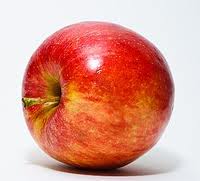
“An apple a day…”  When most people think of apple, they think of the healthy fruit which none of us eat enough of.  Lately apple has also quite often referred to the most valuable company on the planet.  Both of these references are appropriate for my second word for 2012.  This next year I need to develop the next phase of my training program and get back to some healthier habits.  I only ran one half marathon last year, down from two full marathons in 2009.  Apple this year will mean ramping up for more dedicated endurance training but I’m also adding a strength component to the routine this year.  I’ve always been above-average strong because of my work in the tree care business.  But a lot of that is job-specific and I want to change that.  I’ll be honest: some of this motivation is prideful in that I want to improve how strong my upper body looks.  I’ve never really dedicated myself to this type of training and this year it’s going to happen.  Apple also refers to the brand, the Steve Jobs success story, which anyone close to me knows I have a great appreciation for.  I’m reading Walter Isaacson’s biography on Steve Jobs right now and I cannot put it down.  Apple, as an organization, is fascinating.  They “wow” people.  They put out products that are superior to their competition.  They cost more than most.  They are beautiful.  They are efficient.  They are well thought out.  Apple is simply the best.  Steve Jobs did not wake up one day and have all the answers to make the company we know as Apple.  He learned though a long career of successes and failures, strengths and weaknesses how to make Apple great.  Apple needed to be extremely organized.  They needed to continually progress and challenge the process.  They had to be innovative, and even sly as they took other people’s ideas and made them not only their own, but made them better.  So in 2012, apple for me is a reminder to pursue some healthy goals and habit and also to be organizational and progressive in my work.

 

TentHyattGodin

Ok, I’ll admit this isn’t a word.  Stop, don’t even try to look it up, trust me on this one.  Here’s the deal: this third word for 2012 is a reference to my essential reading list for each week and it’s also a reminder.  First, the characters.  These three men represent successful business men who run first class blogs and are role models to anyone who wants to be successful.  Tentblogger is an amazing, well… blogger!  He produces some of the greatest content on the Web for people trying to perfect their craft as writers and small business owners.  He created some epic series of post last year and I count on his insights each week.  He’s been a huge influence on the techniques and strategies I’m using to launch my business.  Michael Hyatt writes about leadership, productivity, and publishing on his blog.  And he does it as well as anyone in the country.  His blog is rated #1 (by PostRank) in the area of leadership.  He has (unknowingly) mentored me from afar for about two years.  And Seth Godin writes like no one I’ve ever read.  He is quirky, he is edgy, he’s definitive and confident.  Oh, and he’s usually right.  Either you love him or you don’t, I’ll let you decide.  These three men have a single quality in common: they show up.  Each day they put fantastic content on their blogs and challenge people like myself to keep going and work on the business, the art, the craft.  TentHyattGodin is also a reminder that for me to be successful it is essential that I follow their lead, apply their writings and coaching, and continue to show up on the blog.

Seth Godin

John Saddington ("Tentblogger")

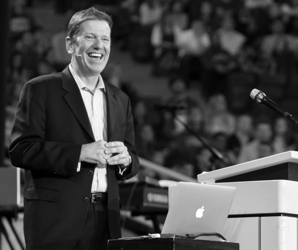
Michael Hyatt


So there you have it.  My three words for 2012: Linebacker, Apple, and TentHyattGodin.  Might you consider Three Words for 2012?  I’d love to hear them.

Tim Tebow Mic’d for Bears game

Tim Tebow is polarizing.  I’ve honestly never seen anything like this.  Keep in mind: you don’t have to to agree with everything a guy does.  I wouldn’t do things the way Tebow is doing them, but that doesn’t mean he’s not extremely good at what he does.  He is a role model.  He is an inspiration.  He is a true leader.  Because he gets it done.

http://youtu.be/grM2sb7VYSs

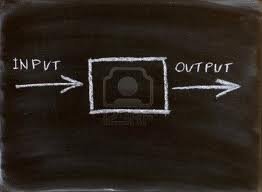
Inputs vs Outputs

It's all about balance

Anyone who spends any time with me knows that I am very passionate about social media.  I am fascinated with how connected our world is, how much we learn from each other, and how readily I have access to high profile people nearly impossible only ten years ago.  This power of social media (for me this includes blogs, Twitter, and Facebook) becomes an incredible tool when I use it to further my research, study, and development in (a) the exercise field and (b) leadership and business management.  I could literally claim a graduate-level degree in these two areas with the experience I’ve gained since 2006.  But for me there is one big hurdle that continually pops up in my weekly social media experience – overload.

I’ve previously written about how to decrease the noise and filter out unwanted or unnecessary information on the social networks.  But this is still easier said than done, and the landscape is constantly changing.  Coach Lecher’s advice rings in my head: “life is a series of adjustments.”  Each week there’s a new person to follow on Twitter, there’s a new blog with a ton of useful information, and there’s another friend of Facebook that I want to catch up with.  The inputs never stop; in fact they continually grow large.

Confession: I am a hoarder.  This isn’t a joke – I’m literally confessing to each and every reader of mine that I don’t let things go.  My laptop is full of things from years ago, things I will never need again… but I can’t hit delete.  My Google Reader is filled with over 60 subscriptions.  I’ve “starred” hundreds if not thousands of items to read.  I use Instapaper to bookmark articles for reading later.  My iPhone now has a “Reader” button so I can bookmark items also to read later.  I will never be short of reading material.

Enough about my failures – let’s make something happen.  What I’ve been trying to show you is that I have numerous inputs in my life.  You may have the same problem.  It may look a lot different, it may not be as bad, heck it may be worse (I can’t imagine!).  But this I know for sure: successful, driven, world-changing people have the ability to manage their inputs and outputs.  Sometimes this tandem gets out of balance.  That’s where I’m at right now.  I’m taking in *so much* information but I’m not producing.  I haven’t blogged in over a month.  A friend actually asked me if I’m still on Twitter because he hasn’t heard from me in so long.  Life has gotten busy, but I still find time to “catch my fix” (read: addiction) to Twitter.

The solution is simple.  Prioritize the inputs, maximize the outputs.  I’m not suggesting an over-compensation shift to the outputs.  But I need to do things like this blog post to get my balance back.  You cannot build a reputation and a business on your potential.  At some point you need to produce.  You’re the same way.  Maybe at a different level, but ask yourself: What am I consuming, what am I producing?

This world is better when we are in balance with what we take from others (in a good way) and what we give to others.  Both are essential.  I will take this Thanksgiving break and reset.  I’ll declare bankruptcy on my to-do list and start over.  I’ll release myself from the burden of reading everything that comes my way, I’ll adjust my lists so that the important things don’t get cluttered with the average things.  I’ll maximize some relationships.  And most importantly I’ll produce and interact rather than consuming everyone’s stuff.


Don’t multi-task your son

I was on a run last week through a nice neighborhood here in McFarland. Ahead of me I could see a father and son pulling a wagon. As I got closer I could see that the boy was dressed in his Boy Scout uniform and they were delivering whatever it is they had sold for the fundraiser. (All I know is the Girl Scouts do the cookies.) It was nice to see the father-son team out on a chilly fall day working together.

My route for the day called for me to turn around about a half-mile down the road. On my way back, I could see the two leaving a driveway and start back down the road towards me. When I got close, I noticed the dad pulling out one (of two) earbuds from his ear to talk with his son. He had been using both earbuds to listen to whatever was on his iPod… as he was walking and working with his son.

My heart dropped.

He was multi-tasking his son. I know because I take every opportunity I can to listen to a podcast, read a blog, or study a few slides and notes for class. Driving alone in the car is great – I can get some good content for 20 minutes or more, uninterrupted.  I know what this dad was doing, and part of me understands the temptation but none of me is ok with acting on that temptation.  You cannot multi-task your son.

Most studies will tell you the brain cannot effectively multi-task.  You can fool yourself into thinking you’re getting studying done while listening to some tunes, and keeping an eye on the news from the TV in the corner and chatting with a few people via text on your iPhone.  But if you were to critically analyze the quality of that studying, there’s no way it compares to what you could do if you were alone, device-free at a quite desk in the library.  Pursuing a disciplined lifestyle requires knowing your limits.  Maybe the dad had a big presentation to review for.  Maybe he had a really good sermon from church that he needed to review again.  Maybe he’s a big U2 fan and the music was moving him in Mysterious Ways.  Or maybe it was sports radio.  Whatever the case, when your 8-year old is working through a list of orders, names, and boxes of whatever Boy Scouts sell, it’s time to take out both earbuds and spend some time with your boy.

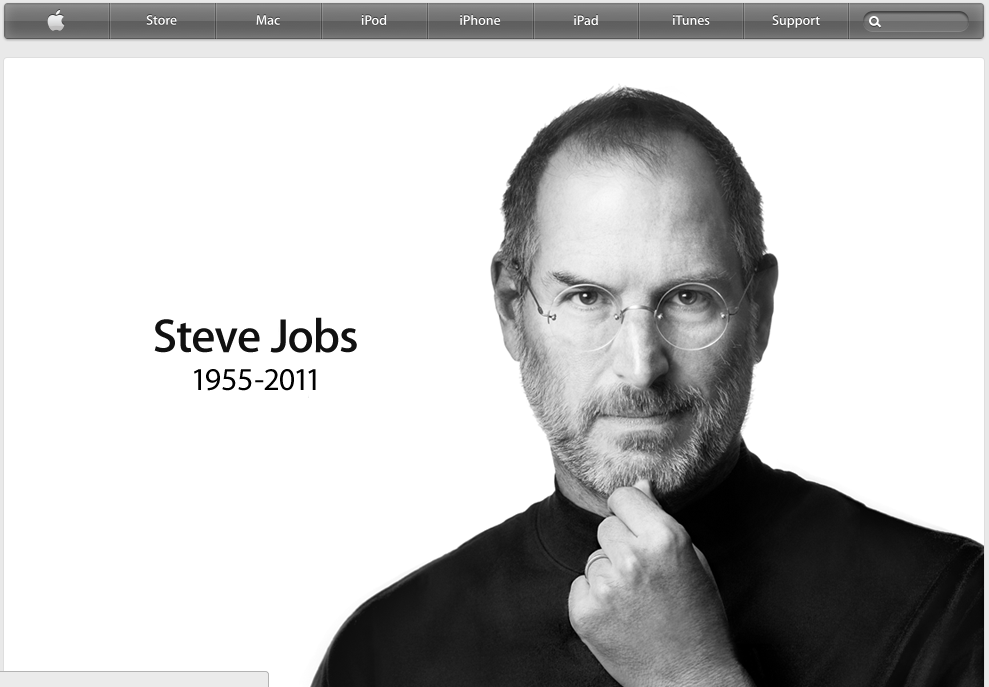
Think Different – The Passing of Steve Jobs

If you don’t use a Mac, some of this may not make sense – I get that. Because I used to be there. I was using a PC because “I was more of a business user…” whatever. I had my reasons and my reservations. But when Katie got her MacBook in 2006, it wasn’t long until I preferred to write blog posts (like the one you’re reading) on her computer instead of mine. At that point in the game it was simply because the keyboard was so much smoother under my fingertips. Then I started reading blogs of other creative and business-minded professionals and I saw a glaring pattern – they were all on Macs. “There must be something to this Mac cult,” I thought to myself.

Thank you, Steve

I wanted one. If I’m really honest with myself, it started as an elitist mentality and desire. But there’s more to it. It quickly became about productivity and passion. About being a catalyst and part of a movement. When I got my MacBook Pro, I had a machine that inspired me to write and create products with a passion that never came out of my IBM ThinkPad. Please read: I have nothing against PCs and I am not suggesting they are inferior computers. I simply always come back to the following thought: I love working and writing on my Mac. If that’s what it takes to sit down every night, do the work and publish thoughts and projects to the world, then it was worth every penny.

I am a newly converted Apple fan. When I really started to look at the company of Apple and the products they shipped, I continue to grow my admiration for Mr. Jobs. While Apple is known as an innovator, it can be argued that they did less creating and more perfecting. Apple didn’t create the ability to take your music with you. The CEO of Sony one day gave Steve Jobs a Walkman. Mr. Jobs was in awe, returned to Apple and started working on the iPod. At age 11 Mr. Jobs saw his first computer as NASA. He didn’t create the computer, but he started a company that perfected the personal computer we know today.

What I’ve learned from Apple and specifically Steve Jobs is that it takes a ruthless dedication and discipline to think differently. This discipline is essential as one aspires to greatness and attempts to change an industry. Because of Steve Jobs, I can write this post and honestly testify to the world that I am actively working towards greatness and even and industry-altering business model.

I read two profound thoughts on Twitter about the passing of Steve Jobs. First, he will be remembered along side of Einstein and Edison. Second, The way to honor Steve Jobs is to take your current project [today] and turn it upside down and shake it up with all your might!

For inspiration, beautiful design, and the courage to think different, thanks Steve.

TED Talks (Sir Ken Robinson)

Have you heard of TED Talks?  TED is a nonprofit devoted to Ideas Worth Spreading.  It started out (in 1984) as a conference bringing together people from three worlds: Technology, Entertainment, Design (TED). Since then its scope has become ever broader.

This was one of the first talks I ever heard in this TED movement.  I think you’ll see why it’s still one of my favorites.