Author Archives: Hans Schiefelbein

About Hans Schiefelbein

In pursuit of a healthy and disciplined lifestyle. My goal is to help people attain and sustain their health.

GTD: Moving From Hope to Trust

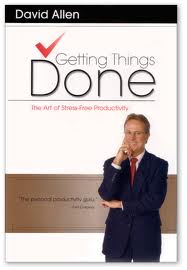
Simply put, Getting Things Done has revolutionized my life.  Excuse the drama – but this book has made a huge difference in my life.  Now I don’t want you to think that now everything is perfect and this is the cure-all book that guarantees success.  That’s not what I’m saying.  What I’m saying is that for where I’m at in life, I manage an extremely busy schedule consisting of multiple projects (both personally and professionally), raising two small children, trying to always be a better husband, training for half marathons, and maybe sitting back with a beer and a good book once in awhile.

I’ve always struggled with productivity and even organization.  Still, I’m moving right towards it and I’ve identified “discipline” as a characteristic essential for my success.  I started reading David Allen’s classic management book Getting Things Done.  I also checked out the audio book from the library so I could listen to it now that sports radio is essentially useless until football returns in the fall.  I digress.
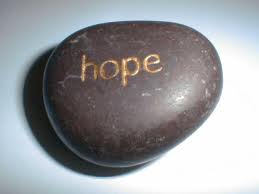
One of the most practical advances in my productivity has been the move from hope to trust.  GTD hinges in the following idea: for you to focus on your work, you need a trusted system to collect all your thoughts and projects, organize and prioritize this list, and consistently review this list to make sure you’re doing what needs to get done.  This idea was about three chapters in the book, so don’t worry if you don’t totally get it.  But the part that was always tripping me up was the bucket.  The bucket is where you collect all your ideas throughout the day.  It’s a big list.  I keep mine in Evernote.  My problems was that I was carrying multiple lists and storing them in multiple locations.  I know – it sounds crazy now that I think about it.  One point for humbly admitting my failures.

I had multiple lists in multiple places.  Things got lost OR things were so disorganized that there was no way I could plan my workflow appropriately.  But thanks to Allen’s system, I’ve created a system of my own.  Here’s the catch: I trust that everything is in the bucket or in my Weekly Review.  So I don’t have to duplicate anything.  And I don’t have to worry about “really remembering this task or that list” because it’s all in one place.  Allen calls this RAM, like a computer – constantly having thoughts and ideas stuck in your head.  Less RAM means more time to be productive.

I’m willing to bet you could find a few ways to improve your productivity and manage your stress level better if you read Getting Things Done.


Poking Thoughts Into Seth Godin’s New Book

Seth Godin

Seth Godin’s new book is titled Poke The Box (Amazon affiliate link).  If you are at all interested in creativity and starting a business, Seth is your guy. It takes a little bit to figure out his style of writing. It’s not smooth, it’s not polished, but it’s effective. He has one of the most read blogs in the world – for a reason.

Why should you read Poke the Box? Because you want to start something. You have an idea, a business, a book, or a blog and you want to create. Not everyone may have this, but you do. “But will anyone care? Will anyone read it?” Doesn’t matter. Go. Do. Ship.

In the business world you want to ship. Create a product, offer a service, and ship it. Send it out. make it go viral. Ship. “But it’s not ready yet… I need a few more weeks to get it finished.” Ship.

One of my biggest goals last year was to start this blog. I had a blog going over on Blogger but I wanted my own self-hosted WordPress blog like so many of the men and women I admire online. But it wasn’t ready. It didn’t look finished, the content wasn’t complete and I couldn’t stand putting a project out there that I wasn’t fully proud of or wasn’t fully complete. Then I realized it would never be exactly where I wanted it to be – it needed to get published, it needed to ship. I launched the next week.

Go buy it - I loved it on Kindle App for iPad

You see failure isn’t an option. “It isn’t an option” a.k.a. “it’s going to happen.” Failure is essential for success. If you haven’t failed, you haven’t been taking many chances, and chances are your product isn’t very good. Check that – it probably *is* good, and that’s the problem. You’re looking for extraordinary.

I go on this “failure” rant because it’s one of my favorite part of Seth’s book.  Do you know how many times Joe Torry got fired?  Fired!?! He failed at his job and they fired him! Three times.  Have you ever been fired?  He was fired three times.  Oh, and now he’s one of the most successful managers in Major League Baseball.

I’ve written about failure before.  I’ll continue to fail and I won’t like it but i know it’s essential for success. Poke the box is about poking the box and taking initiative. Create something. Then ship it. You may fail, you should fail. But you’ll be on the cutting edge and if you really care, you’ll make your adjustments and ship again.

Go buy Poke the Box.

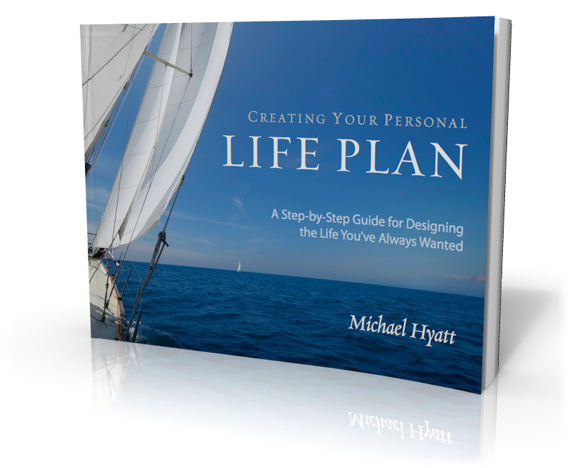
Book Review: Creating Your Personal Life Plan by Michael Hyatt

This week one of my favorite voices on the internet, Michael Hyatt, came out with an e-book entitled “Creating Your Personal Life Plan.”  The premise of the books is that if you don’t plan your life and take initiative, you will end up somewhere you don’t want to be.  For Michael that was burning out and breaking down, professionally and personally.

I’m not a fast reader, and I read this book in one night.  It’s a collection of blog posts that he wrote over the last few years.  He’s polished them up and blended them into a very practical game plan.  Hyatt organizes the book into three sections – outcomes, priorities, and action plans.  Some of his thoughts are based off of David Allen’s Getting Things Done which I wrote about earlier.  I also see a big influence from Stephen Covey’s 7 Habits of Highly Effective People.

For me the book was a good reminder that I need to start with the end: how do I want people to remember me?  What do I want to accomplish at the end of my life and career?  Then I need to carefully process next action steps towards those goals.  The book is a perfect length for this type of reflective activity.  You can read the book in one or two nights, but that’s where the whole process simply begins.  The real soul of the process comes in the planning part of “Creating your Personal Life Plan.”  What you need to do is take these tools, these ideas, and reflect on where you want to go, who you want to be, what you want to do.  And he gives you the tools.  He’s included simple Word and Excel files for you to use as you brainstorm and plan this activity.

Do you feel like you’re in control of your destination?  Is life pushing you around?  Could this book be worth one evening of reading?  Oh, did I mention it’s free?!??

Check out Michael Hyatt’s free e-book and invest a couple days in yourself.  You’re worth it.

Running at the Next Level: Squats and Lunges

Everyone has a “next level.”  I love working with people whose next level is running two days a week.  Or starting a push-ups and sit-ups routine three days a week.  But many of the people I know are runners or bikers who have a few competitions under their belt and now they’re starting to compete with themselves.  And they want to take their competition to the next level.

The first thing I recommend is strength training.  As a runner, I know what I’m going to get out of my runs.  I know how all the long runs build up over the 12-week training period and I know how the mid-week runs all support that increase in mileage.  But cardio strength is different than muscular strength.

Last summer I started to do a little more strength training with two exercises for the legs: squats and lunges.   These two exercises are great for a few reasons.  First, they don’t require any equipment.  And if you did want to add some resistance, anyone can find 30-50 lbs of gear around your house or garage to up the ante.  Second, they’re whole-body exercises, so not only are your legs benefiting but you’ll see results elsewhere.  In fact, these two exercises are half of my Faithful Four routine I use for my Sports Conditioning clients.

I’m not going to go over technique.  You should be able to figure that out yourself.  Contact me in the comments section or shoot me an email if you’d like to talk about this one-on-one.  If you’re looking to take your running to the next level, try three sets of 8-12 reps of squats and lunges during your week.  Do this for two weeks and share your results with me.

David Allen’s GTD

One day as I was talking about my blog and my newest love affair with Twitter and how it pushes to update my Facebook account, my sister-in-law (Jes) stopped me and said “How do you get everything done?”

For a moment I was proud that she noticed all my efforts and even areas (or glimpses) of expertise.  I work hard to create excellent content on my website and stay connected to friends and family on the social networks.  And lately I’ve been building some great relationships with people around the country who have interests similar to mind.

But Jes hit a little too close to home.

Continue reading →

Proof in the Pudding (and Vital Signs)

I was at the doctor for my yearly physical last week and the nurse made my day.  She was taking my vital signs and after she did my blood pressure and heart rate, she said “are you a runner?”  I told her yes.  She said she could tell from my low blood pressure and resting heart rate.

It wasn’t really a surprise to me.  I know my vital signs are good because I am very physically active at my job and I run half and full marathons.  But to have a complete stranger be able to guess my physical activity hobby based on my vital signs was a pretty good feeling.  Of course I partly get geeked out by this because I’m an exercise specialist who knows the science behind good health and what it should look like.  And when the nurse saw it in me, that’s a sense of accomplishment.

Outwards appearance, including waist circumference, is telling of a person’s health.  But more importantly we need to know what’s going on inside the body.

  • How strong is the heart?  Is it able to pump essential blood throughout the body?
  • How much resistance (cholesterol and plaque build-up in the arteries) does the heart have to overcome to circulate blood?

Don’t ignore your vital signs.  This is something the general population is uneducated about.  Healthy blood pressure and a low resting heart rate means your heart can sufficiently and efficiently pump blood (and thus nutrients) easily throughout your body.  When we build up that resistance, the pump (“heart”) wears out.
How’s your blood pressure?  What about your resting heart rate?

On Record: Improving in 2011

In my last post, I challenged you to improve your fitness in 2011 – just improve from last year.  If you didn’t do *anything* last year, this should be easy.  My ambition for this comes from a common motivation we all have inside which is to improve in what we do, in all aspects of life.  While we spend 40+ hours at work each week and are constantly trying to improve as an employee or as a business owner, what about our fitness?  Shouldn’t we bring the same initiative to improve to our fitness life?

I’ve been a runner for quite a few years now.  I’m not fast.  But I have gotten faster. Or am I just more experienced?  My marathon finish times (in chronological order) are: 4:06, 3:59, 3:47.  Looking at the raw numbers you might think I’ve gotten faster, but if we got into the details you’d see that the last time was in the fall after I had done the 3:59 earlier that spring.  So I had a huge advantage.  Why do I mention this?  Because there is so much room for improvement – and that’s the name of the game today, right?

I would never challenge my readers without being willing to take my own advice. I want to improve my races in 2011.  I’m still unsure of what the fall will hold for a race.  But I know the spring I’m doing the Madison Half Marathon.  Here’s how my challenge will work for that: My fastest half marathon time is 1:47.  The problem is that this was the first split as I was doing Madison full marathon.  So my cardiovascular system was trained for 26.2 – how easy is 13.1?  Very.

But I’m still going to beat that time.  In 2011, I’m going to run the fastest 13.1 miles I’ve ever run.

Remember, the challenge is only to improve. For me that means running faster.  For you, it could mean many things:

  • running more days per week
  • running your fastest 5K
  • lifting weights 3 times per week all year
  • doing 50 pushups per day for a month

The beauty of training is that it is so personal.  You are where you are; I am where I am.  But part of my motivation is to challenge you to take the next step towards improvement.  As Will Rogers said, “Even if you are on the right track, you will get run over if you just sit there.”

A 12-second blog post to improve 2011

Imagine the last five years or so.  Can you think of an area of life where you got better from one year to the next?  I mean, really…  Isn’t everyone looking to improve at life?

Well in that conversation of improvement, what if you improved this year in the area of fitness?  How fit have you been over the last five years?  What would it take – what one step would it take – for you to improve by December 31 of this year?

Go put it on your bulletin board or send it my way and we’ll work together towards improvement.  I’ll post mine next week.

Isn’t that simple?  “This year I will be better than I was last year.”

Finally, the NFL Season is OVER!

Each year I desperately look forward to the end of the NFL season. I’m a huge football fan, and this year was especially exciting because our Green Bay Packers went to (oh yeah, and WON) Super Bowl XLV. But this had no effect on my anticipation for the day after the big game. Why would a football fan be looking forward to the end of the NFL season? No more sports radio.

I’ll admit: I’m pretty addicted to sports radio. But what really interests me is the NFL talk. When the Super Bowl is over, sports radio tries to hold on to the listeners for a few more weeks, but really the shows become focused on the NBA and Spring Training. No thank you.

So this time of year I fire up my iTunes and audio books onto my iPod and start using my commute time for some learning. Right now I’m going through Francis Chan’s book Crazy Love. I’m also listening to North Point Church’s series on money called Balanced. After that I’m not quite sure where I’m going, but most likely another audiobook.

I have about a 20 minute commute each way to work in the morning. Additionally, I sometimes have windshield time to our job site for the day. This means I can log up to 60 minutes of learning each day. That’s 300 minutes a week. I’m not sure how long an audio book is but this is a big chunk of time I used to spend on sports radio.

Do you have seasons where you read more than others? Do you listen to audiobooks?

Last Year I Joined Two Cults: Part 2

Last week I revealed that in 2010 I joined two cults.  I talked about two organizations that our culture talks differently about.  The first was Apple.  You can read about my Apple affiliation here.

The other cult I joined has to do with my blogging hobby.  I started blogging in 2006 as a way to take my thoughts of organizing my Game Plan for life to an online forum.  I’ve always kept a journal and made plans, and this was my attempt to take it to the next level.  I’d say I accomplished that.  But just to look back, here’s my first post welcoming all my readers to the Game Plan.

Over the next four years my blogging evolved.  Last year, after subscribing and even studying some of the best bloggers in the world, I decided I needed to take my blogging yet again to the next level.  At this point I had focused my content and even created a moto: in pursuit of a healthy and disciplined lifestyle.  I had established my voice through my blog.  The blog was no longer an online journal but rather a platform for me to talk about areas where I could add value to people’s lives – specifically areas of exercise and personal discipline, including leadership.

One of the most significant areas where my blog was behind other prominent bloggers was the platform.  I had started blogging on Google’s Blogger and that was a great start to blogging.  After all, I didn’t know if this hobby would stick and I knew most blogs fail after about three months.  My blog made it – here I am five years later and 100% better.

So this brings us to the next cult I joined – WordPress.  Every serious blogger I read except one (Seth Godin) was using the (free) software developed by Matt Mullenweg.  This upgrade required me to purchase a domain and a hosting plan (you know the domain, hosted at DreamHost).  There are many other reasons and decisions built into this, but for now I want to highlight WordPress.

I still consider myself an amateur blogger, but WordPress offered me three components that Blogger couldn’t:

  • ownership – I was forced to purchase an online domain.  This is becoming more and more important as the digital world develops and an online presence is increasingly important.
  • appearance – Blogger is good for many people, but my ambition is to develop my blog into an extension of my business in the exercise and fitness industry.  WordPress is much more professional looking.
  • options – As a profitable business, not just a free add-on of Google, WordPress is loaded with options and customization that allow me to organize my content as a legitimate content management system rather than simply a series of posts.  To be fair, Blogger has added some nice features.  But WordPress is a legitimate piece of software for building an online business.

The reason I was inspired to talk about these two cults is because as I spend time studying business, leadership, and publishing (including blogging) there are certain organizaions and best practices that jump off the page.  Two fo those for me have been Apple and WordPress.  Have you ever heard of anyone promoting their HP or Dell computer as a machine worth talking about?   Have you spent time in the blogosphere and heard people rave about Blogger, Tumblr, or Drupal?  I don’t have any significant research here, but I’ve had my hands on the pulse of the digital world, and these two products are superior.

But as any practitioner will tell you, it’s not the software that will make a person successful.  It’s not the tools (in and of themselves) that will provide an advantage over the competition.  It’s how you use the tools – ultimately it’s about the content.

The my new products I enjoy writing, I am more efficient with my time, I look more professional, I have more options, and at the end of the day I’m putting a better foot forward.